
Eating Lunch with MAGA, talking about shame: Kitiki #476
Breaking Bread as Jesus would like us...


“Being deeply loved by someone give you strength, while loving someone deeply gives you courage,” a quote purportedly by Lao Tzu.
I thought about this a good deal lately. Particularly since I’m about to have lunch with a good friend of mine from the other side. By the other side I mean the other side in our current country where it’s an effort to not immediately look to politics. A sobering truth that becomes more and more apparent daily is what Thomas Kellar asked us to do in his book The Prodigal God. That sobering truth is to realize “you can’t live without a family of believers.”

That’s a real challenge, especially when a lot of the believers don’t seem too interested in sitting at the table prepared for them by someone they once loved, and deep inside still do, and break bread as Jesus would have wanted us to do. Break bread with strangers, immigrants, people who don’t look like you. Break bread with those who don’t seem to care about the poor, the homeless, or those seeking justice. As I mentioned, it’s a real challenge.

My hat is off to any of you who are willing to do that, and as I plan to break bread, I wonder how far will I go? How far I will go before seeing the log in his eye, while ignoring the speck in mine, and for him, the opposite may be true. Can we truly eat together and find a sustenance in Jesus and how Jesus would want us to see truth without casting doubt on our faith. It’s going to be hard, perhaps without bringing up a litany of transgressions that even a blind man could see.
This friend has been through a lot. I’ve tried to be there for him, more so as he’s told me than he’d been there for me. Friendships are that way. Friendships manifest in discussions that often culminates over a meal, much like the feast at the end of the Prodigal Son parable. All Christ wants for us is to realize everything we need or want is in front of us. We just have to choose what we want to eat, remembering reconciliation is also served at the table.
Examining the central points of the parable, we extract certain truths. I’m assuming most know the parable of The Prodigal Son [1]. It’s more than a story about a forgiving father. There’s a son who left, took his inheritance, squandered it, and then returned to ask his father’s forgiveness. There’s the reactions of his self-righteous brother who’d stayed. Yet the seminal thread of how to treat each other comes from questions many of us rarely consider.

If the son had not left, there would not have been a feast. If the son had not gone into the world to experience eating with pigs, he would not have appreciated fully the table his father had daily. If the son had not left, the older son would not have been reprimanded for his own shallowness that we all are worthy to attend the feast God has ready for us, and all are invited to enter into the hall and sit down for the feast “you can’t live without a family of believers.” As I struggle to prepare a table for a friend, I am reminded by David that God “prepares a table before me.”

As we situate ourselves for these tables we avoid putting religion, family, or politics on the menu. People to be spiritual but not religious and avoid truths. I contextualize this idea as justifying opportunities to not come to the table with people you don’t like, thereby leaving out a connection to being Christlike.
Recently James Talarico, a former seminary student, and state senator running for the US Senate in Texas lays it on the line, “Do you know people who love Jesus and don’t seem to love anyone else?” Talarico said “That kind of religion that says you can treat people however you want, as long as you have a personal relationship with Jesus is an abomination. It is a cancer on the body of Christ.”
Talarico pushes the envelope to turn back to what Jesus is all about. [2] At a table enjoying a feast where everything is open for discussion. We find value in the virtue of who we are, our North Star and reconcile the hard stuff.
Facing my friend who over the years I’ve hugged, cried with, and at times put our relationship on hold because it seemed we didn’t love the same Jesus. My friend learned I was willing to bend, but I learned I couldn’t allow myself to bend so far or I, like Tevye in Fiddler of the Roof, would break [3] from the truths I grew up loving. My friend loved his family, and loved me, and his Jesus. We grew as we uncovered mutual scars that we were unaware that restricted how far we would bend. It’s call space. He needed his and I need my own. But the love we shared helped us manage. That is until now.
Now I am growing the courage to challenge my own resolve to help both find a space where we’re centered on what’s right, not so much what we want to be right. Now I challenge a syndrome I’m accused of having and ask about the embrace of hating the sin but loving the sinner. Now this is too poisonous to ignore and I’m not sure I can tolerate the pain my own loathing might cost me as I see the cancer spreading.
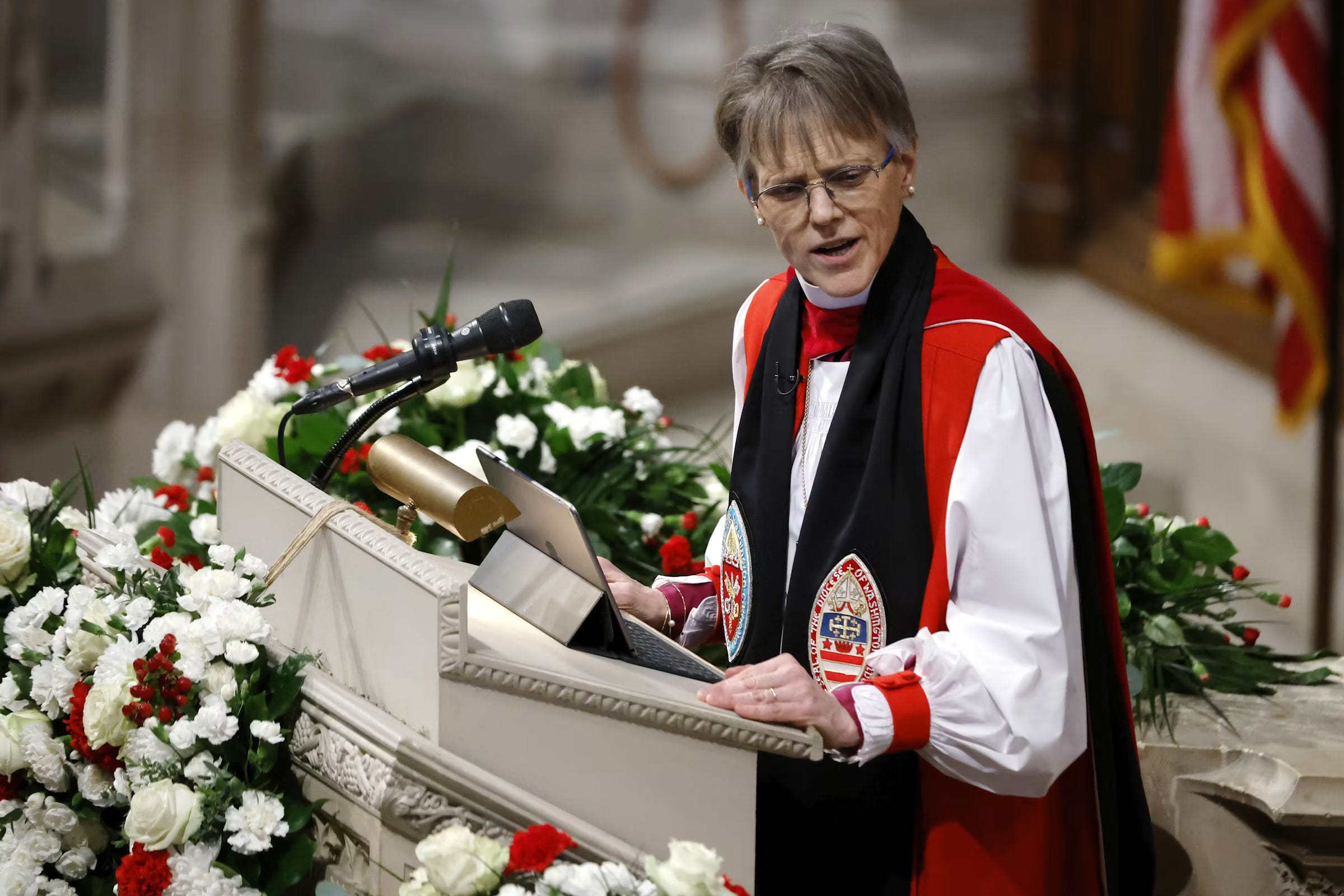
And at this meal, I think all bets are off. No doubling down. Time to rip off the band aid, suture the scar and ask as Bishop Budde asked for mercy,[4] and many others have asked, I ask myself, “have you no shame?”
[1] What is the meaning of the Parable of the Prodigal Son? | GotQuestions.org
[2] James Talarico: Flipping Tables Like Jesus, Not Christian Nationalists
[3] If I Bend That Far, I’ll Break – A Pastor’s Thoughts
[4] Trump in Disbelief as Bishop Calls Him Out in Inaugural Prayer | The New Republic